Hearing Care
Reducing the Risks of Noise Exposure
Noise exposure is the second largest contributor to sensorineural hearing loss. Aging is the most common contributor, but that is something we are unable to control. At work, home and beyond, use these strategies to reduce your risk of damage from loud noises.
Occupational Noise Exposure
Noise exposure at work is often gradual, unless you suffered from an acoustic trauma (such as an explosion, mechanical blow-up or unprotected firearm use). For industrial noises, the greatest amount of damage usually occurs within the first 10 to 15 years of exposure.
Gradual exposure to excessive noise can permanently damage your hair cells. Acoustic trauma may cause initial permanent damage or a temporary shift of hearing sensitivity (called a temporary threshold shift) that may later recuperate to varying degrees. Noise trauma to the cochlea may make it more difficult to hear clearly. That means the volume of sounds may be adequate, but words are difficult to understand because certain sounds are not clear.
Many employees are exposed to hazardous noise daily. Even with hearing protection, noise induced hearing loss is still possible. The potential for hearing damage is a function of the amount of time you are exposed to noise after the noise has been attenuated (or buffered) by your hearing protection.
Any individual exposed to occupational noise should have their hearing assessed within the first six months of employment and at least every two years to continue monitoring hearing thresholds. Keep track of these records yourself because these records are only required to be kept for 10 years by the individuals doing the tests.
The Audiology Clinic of Northern Alberta provides audiogram reviews and consultation services for workplaces with a higher risk of noise exposure. We can also review abnormal hearing baselines and suggest further referrals as necessary.
Recreational Noise Exposure
Recreational noise can do just as much harm as occupational noise! Any noises that are 85 dB or louder can be potentially harmful.
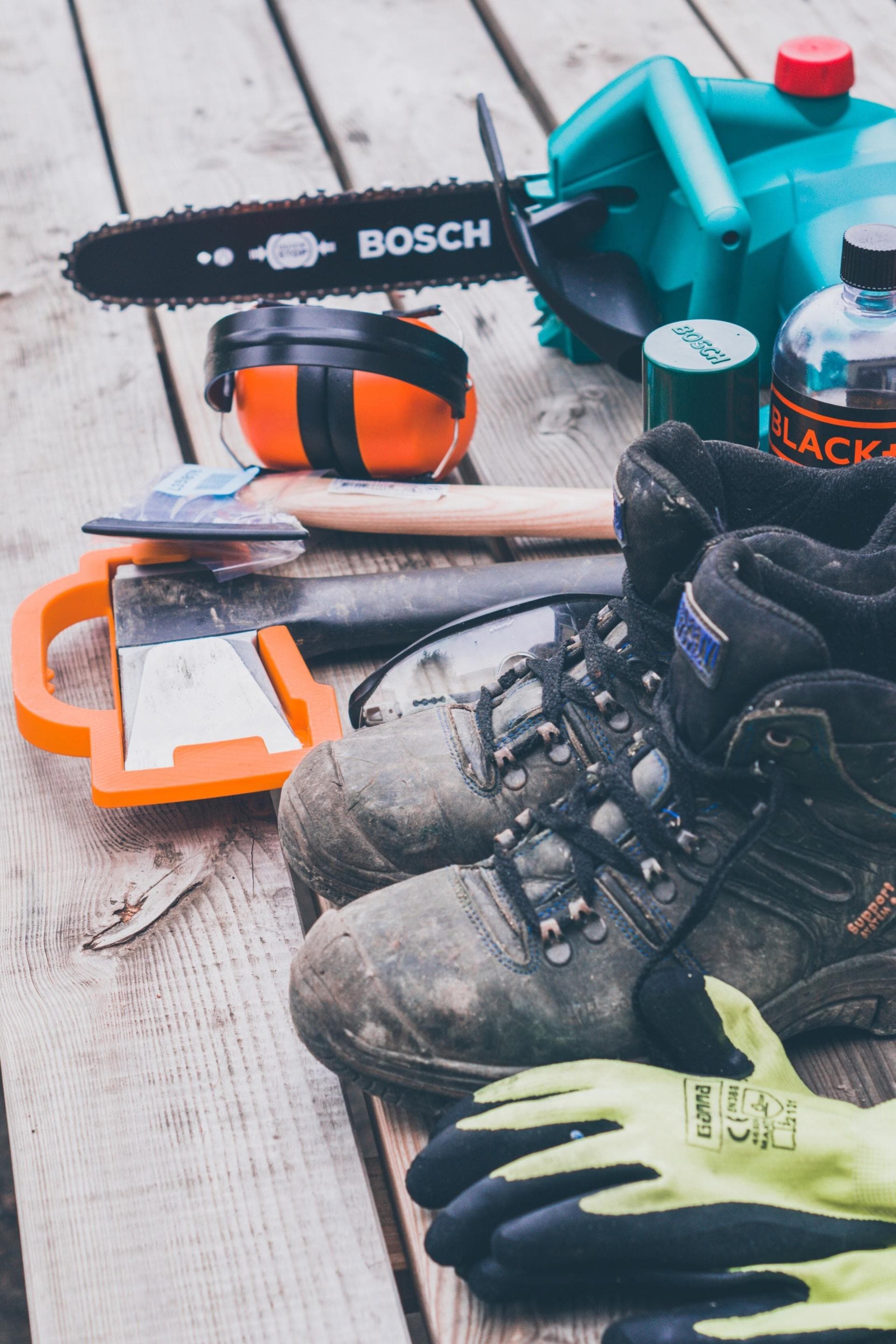
We are often aware of the obvious noises, such as ATVs, snowmobiles, motorcycles, loud engines, chainsaws, firearms, loud music and heavy equipment. But there are many everyday noises that we may not think about when used on a regular basis that could be contributing to the demise of our hair cells. This includes lawnmowers, power tools, vacuums and even some hair dryers.
Hearing Protection
Hearing protection comes in many different forms and fits.
The most common types of personal hearing protection devices (PHPD’s) are earmuffs, custom ear plugs and disposable earplugs. These all come in varying noise reduction ratings (NRR), sizes, saturation levels and are equipped with differing noise or speech filtration systems.
A higher NRR means the device should dampen more sounds. But be cautious when considering the NRR, the ratings depend on the device’s age, fit, size and filters, in addition to the wearer’s hearing sensitivity.
PHPD’s are not one-size-fits-all and wear out over time. Earmuffs have replacement recommendations for the unit itself as well as the pads that cushion the user’s ears. It is recommended that the user refer to the provided manual for those recommendations and adhere to them for the best noise reduction. Earmuffs that are not very tight to the head are not effective.
Custom ear plugs typically have a shorter life expectancy due to the materials they are made of (most commonly a soft silicone). They can crack, break, shrink and eventually wear down. As well, the ear canal can change over time. Replacement of custom ear plugs is usually recommended after a couple of years.
Disposable earplugs can provide some of the best attenuation due to the tight seal, assuming the NRR is enough and they are inserted correctly. Earplugs are the most common devices to use when “doubling up” on hearing protection, they fit nicely under a set of earmuffs.
Was this article helpful?